EFG 360
Investment analytics made usable for one of the region's largest banks.
- EFG Hermes
- Lead Product Designer
- 2019 — 2020
Context
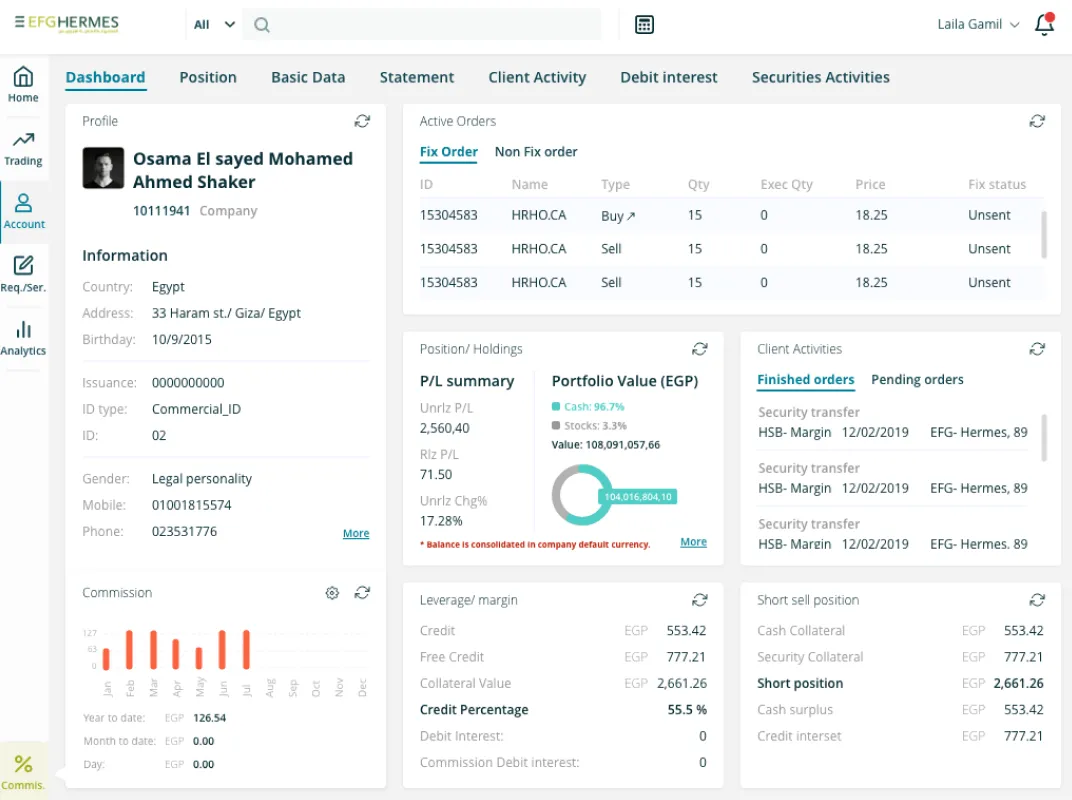
EFG 360 is EFG Hermes’ flagship investor platform — the lens through which institutional and high-net-worth clients see their portfolio across asset classes, currencies, and products. The incumbent product had grown by accretion: dozens of reports, inconsistent terminology, and a navigation structure that mapped to the bank’s org chart rather than to the questions its clients asked.
Research and discovery
We shadowed relationship managers across the bank’s main desks — fixed income, equities, and structured products — and sat in on client review meetings to watch the actual workflow rather than the described one.
The consistent finding: the bank’s most valuable interaction wasn’t a dashboard at all — it was a conversation. Clients came in with a handful of recurring questions (“what’s my exposure to X?”, “how is this performing vs. last quarter?”, “what’s changed since we last spoke?”). The RMs would then hunt across five separate tools to build the answer in real time, in front of the client, often visibly fumbling.
We inventoried those questions. Fewer than twenty recurred across the bulk of meetings. That number — under twenty — became the spine of the rebuild: every top-level view in EFG 360 answered one of those questions directly, rather than showing raw data and expecting the user to assemble the answer themselves.
Approach
The natural design alternatives were familiar from the category. Organize by asset class (the bank’s existing structure). Organize by risk profile (the analytics-product convention). Organize by report type (the legacy product’s structure). Each maps to a different mental model — and none of them matched what RMs actually did during client meetings.
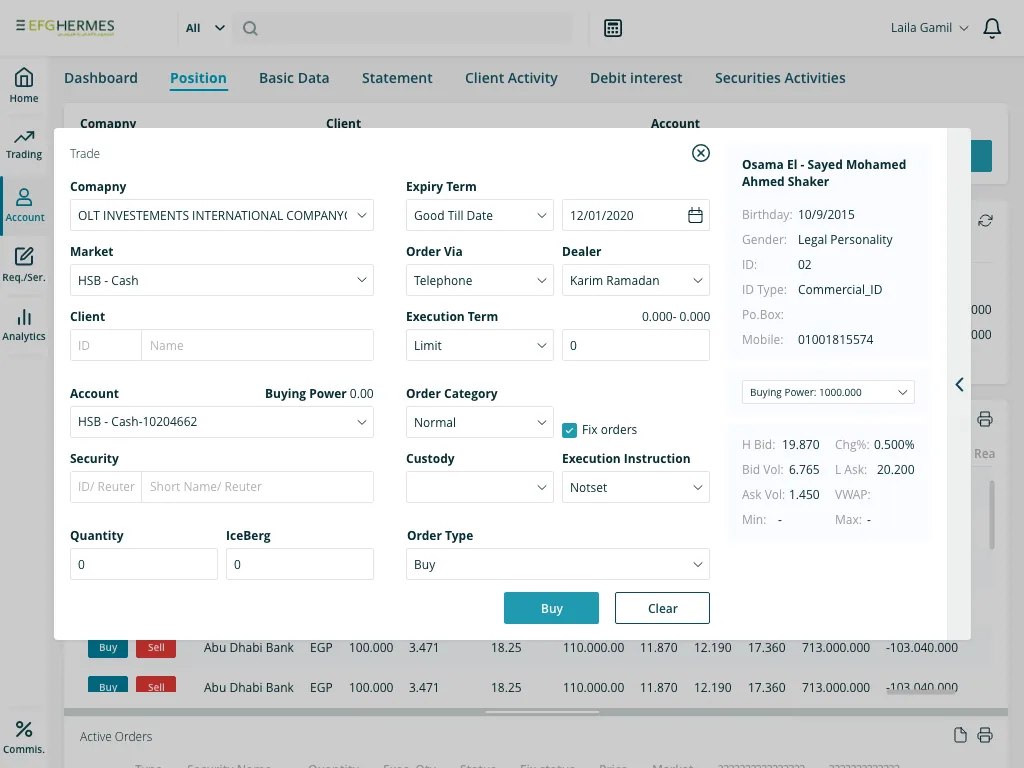
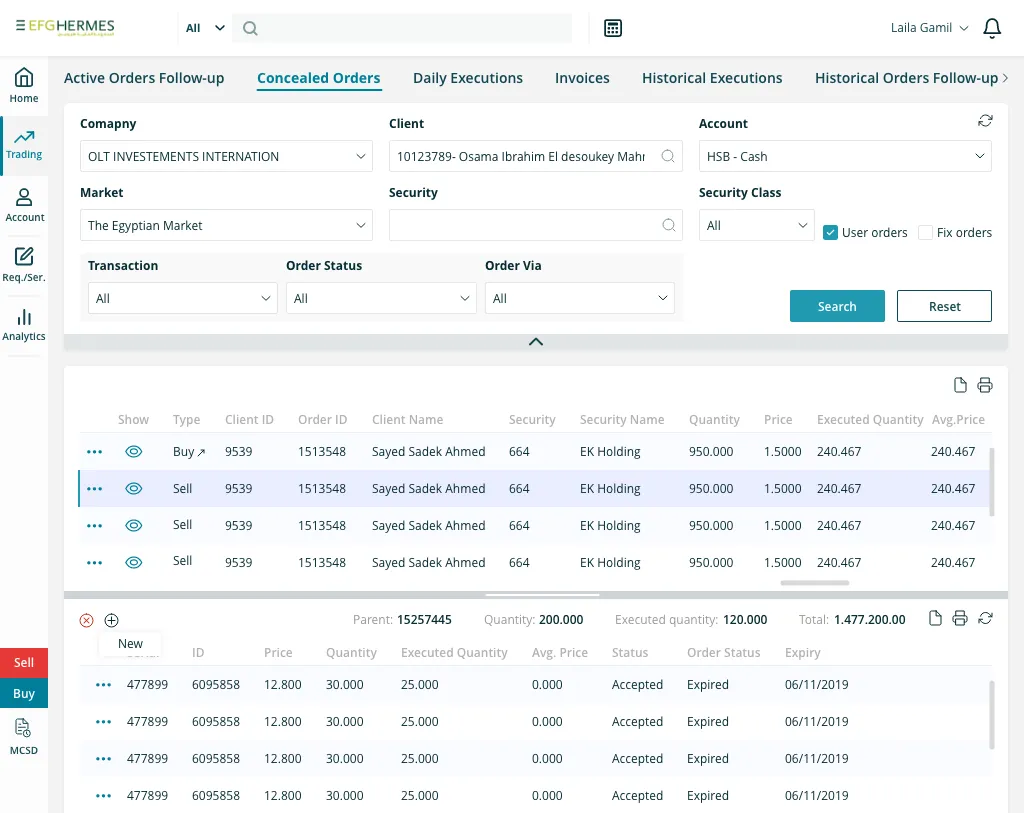
We reframed the navigation around client intent: performance, exposure, activity, and changes became the four primary lenses. Each was designed so a relationship manager could land on it during a call and answer the question in under fifteen seconds. Tables stayed where tables worked; we didn’t reach for charts as decoration.
The fifteen-second target wasn’t arbitrary. It was the time we’d observed RMs lose before clients started talking again — long enough to look up an answer, short enough that the conversation didn’t stall. The architectural call (four lenses, not five hundred reports) and the visual call (legibility over decoration) both served that target.
Solution
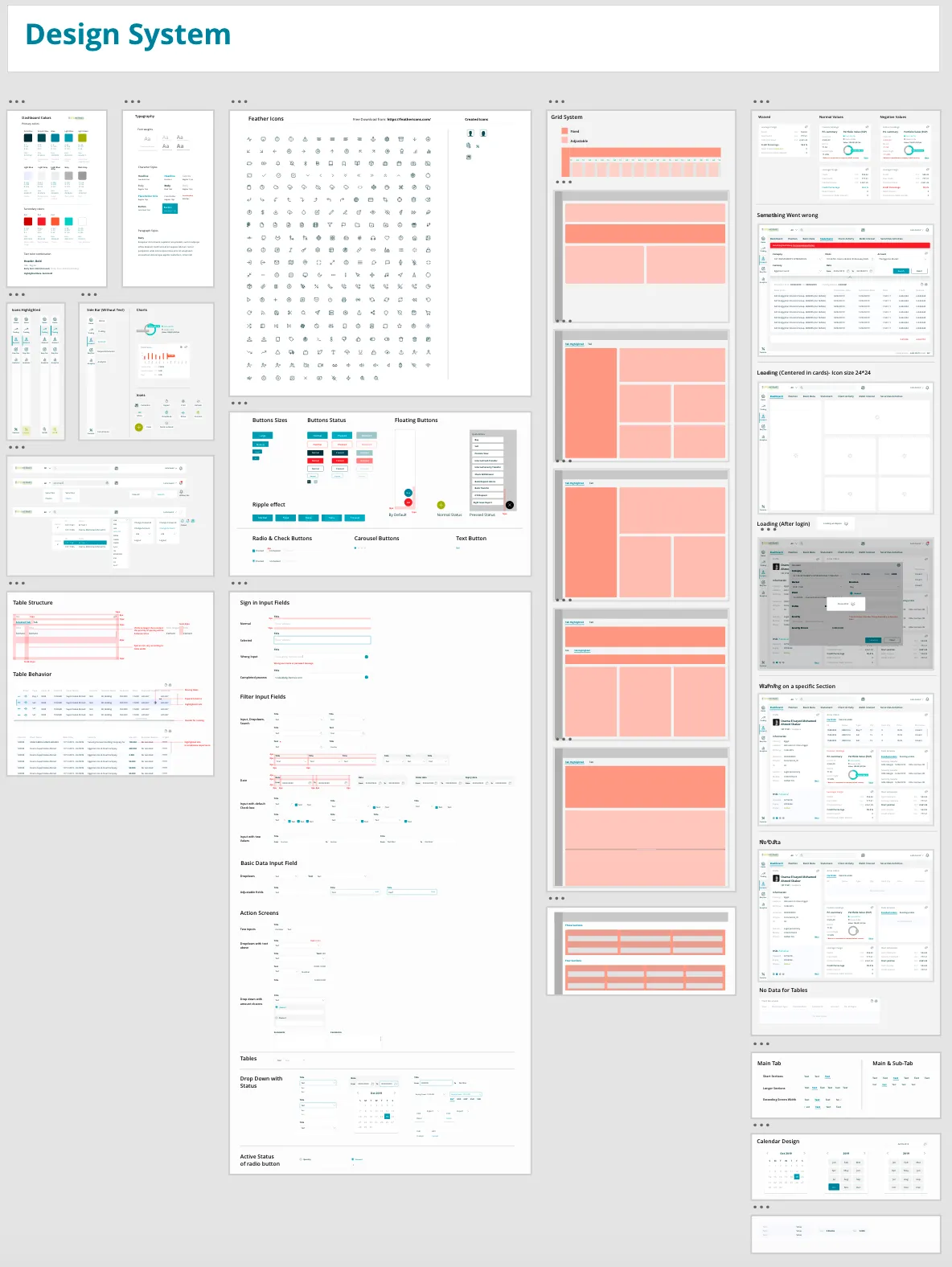
Outcome
EFG 360 shipped across EFG Hermes’ private banking and institutional desks. Relationship managers cut prep time before client meetings significantly, and the platform became the default surface for quarterly client reviews.
Reflection
Financial enterprise software is often blamed on its users — “the data is complicated, analysts should learn the tool.” The Evra lesson applied here too: if your users open Excel to answer a question your product should already have answered, the product isn’t done.
There’s a second lesson worth surfacing. Senior enterprise products live or die at the moment of use, not at the moment of demo. EFG 360’s win wasn’t that it had more features than the incumbent; it was that the four lenses matched what RMs actually did in front of clients. Most enterprise software is designed for the buyer in the procurement meeting — full feature lists, broad capability claims, configurable everything. Product that gets used is designed for the operator at three p.m. on a Tuesday with a client on the phone, hunting for an answer. Those two readers want very different products.
SafeInHome →
Remote care monitoring for adults 65+, designed for the people using it.